
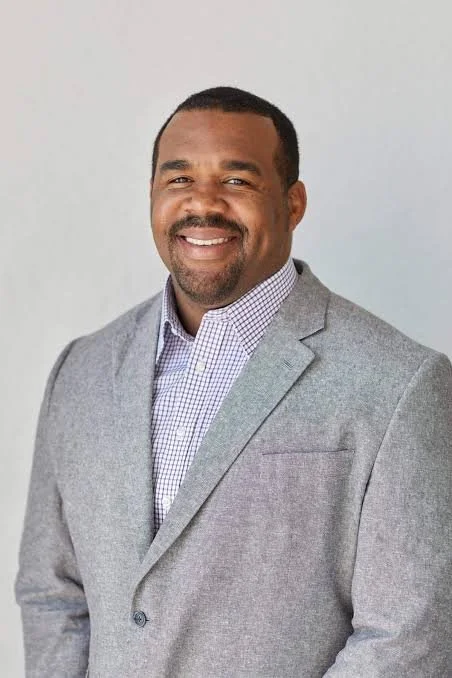
Conversation with Edwin Harris
FOUNDER & PRINCIPAL, EVOKE STUDIO ARCHITECTURE
1. How have you been able to advance your own vision and mission working on the Tubman Health Center?
The Tubman Center has allowed me to advance a central belief behind my work: architecture should do more than accommodate people; it should inspire them, strengthen them, and help them see greater possibilities for themselves. I call that idea Space Power.
This project brings that philosophy into direct alignment with the Tubman Center’s mission. We are designing a place where responsive healthcare, community, dignity, and freedom are not separate ideas. They are expressed through the building itself. Every decision, from the organization of the spaces to the building’s public presence, is intended to communicate that the people entering this center are valued, understood, and deserving of exceptional care.
For me, this is an opportunity to demonstrate that architecture can help institutions embody their convictions. The building should not simply contain the Tubman Center’s work. It should give that work a visible, tangible, and inspiring form.
2. While designing the Tubman Health Center, how have you thought about the connection between the building and healing for Black, Brown, and queer communities?
Healing begins with feeling safe, respected, and seen. Healthcare has historically carried overtones of exclusion, judgment, mistrust, and harm. We understood that the Tubman Center could not feel clinical, institutional, or detached from the people it serves.
We have approached the building as a place of welcome, protection, connection, and agency. The central courtyard brings light, nature, and calm into the heart of the center. It also creates a protected communal space where people can pause, gather, and feel connected without feeling exposed. The building’s woven exterior expression reflects the strength created when distinct identities, histories, and experiences are brought together.
Architecture may not heal someone on its own, but it can absolutely support healing. It can reduce anxiety, preserve dignity, offer moments of restoration, and communicate that care has been taken to create a place specifically for you.
3. What’s an interesting challenge you had to work through in that process?
One of the most meaningful challenges has been balancing openness with protection. The Tubman Center should be visible, welcoming, and deeply connected to its community, but it must also provide privacy, safety, and a sense of refuge for people who may arrive feeling vulnerable.
That tension has influenced the entire design. We have worked to create a building that presents a confident and uplifting public identity while carefully controlling views, transitions, and access. The courtyard became especially important because it allows the center to open inward toward light, nature, and community while maintaining a protective edge along the street.
The challenge was not to choose between openness and safety, but to create an architecture capable of providing both. That balance reflects the Tubman Center itself: bold in its public mission, yet compassionate and protective in the care it provides to each individual.
4. What’s it like for you, as an architect, to work on community-directed projects like this?
Community-directed work requires humility and empathy. My responsibility is not to arrive with a predetermined architectural answer. It is to listen closely, understand what a community values, and use design to give those values form, presence, and power.
At the same time, listening does not mean abandoning design leadership. As the architect, I have to synthesize many voices, recognize the deeper aspirations behind what is being said, and translate those aspirations into a coherent and inspiring place. The process is collaborative, but it also demands personal conviction in how I interpret what I have heard and give it architectural form.
Projects like the Tubman Center are among the most meaningful opportunities I can have as an architect because the work is accountable to real people and a consequential mission. When the process is done well, the community can recognize itself in the architecture. It is not a caricature based on surface-level assumptions or familiar cultural symbols. It is a sincere expression of the complexity of who people are, what they value, and what they aspire to become. That requires us to look beyond what is immediately visible, listen more deeply, and design from a place of genuine understanding. That is the promise of Space Power.